
Cloud Cost Management
+ FinOps
Turn cloud spending into business decisions: reliable forecasting, clear unit economics and continuous control, aligning Finance, Engineering and Business under a modern FinOps practice driven by artificial intelligence.
Benefits of Cloud Cost Management with FinOps approach
Full visibility of cloud spending
From "black box" to real financial control.
Reliable forecast for dynamic OpEx
Real planning for a cost that changes every day.
Optimization without slowing down Engineering
Efficiency from design, not after the problem.
CFO + CTO + Product Alignment
FinOps breaks down silos and creates a common language.
Control of AI and Cloud spending
AI scale without losing margin.
Cloud Cost Management is the starting point. FinOps is the evolution.
Reducing costs is necessary. Maximizing value is strategic.
| Cloud Cost Management | FinOps | ||
|---|---|---|---|
| Required operational basis | Strategic evolution | Base operativa necesaria | Evolución estratégica |
| Technical control of expenditure | Financial governance of the security | Control técnico del gasto | Gobierno financiero del valor |
| Direct bill savings | Business value per dollar invested | Ahorro directo en la factura | Valor de negocio por dólar invertido |
| Focus primarily on IT | Finance + Engineering + Business | Enfoque principalmente en TI | Finanzas + Ingeniería + Negocio |
| Metric: gross cost | Unit economy + efficiency | Métrica: costo bruto | Economía unitaria + eficiencia |
How we do it
Inform
AI to consolidate consumption, allocate costs and generate actionable visibility.
Optimize
Predictive models that identify savings and efficiency opportunities prioritized by financial impact.
Operate
Intelligent automation and early detection of anomalies before they affect the monthly close.
Capabilities that turn cloud spending into competitive advantage
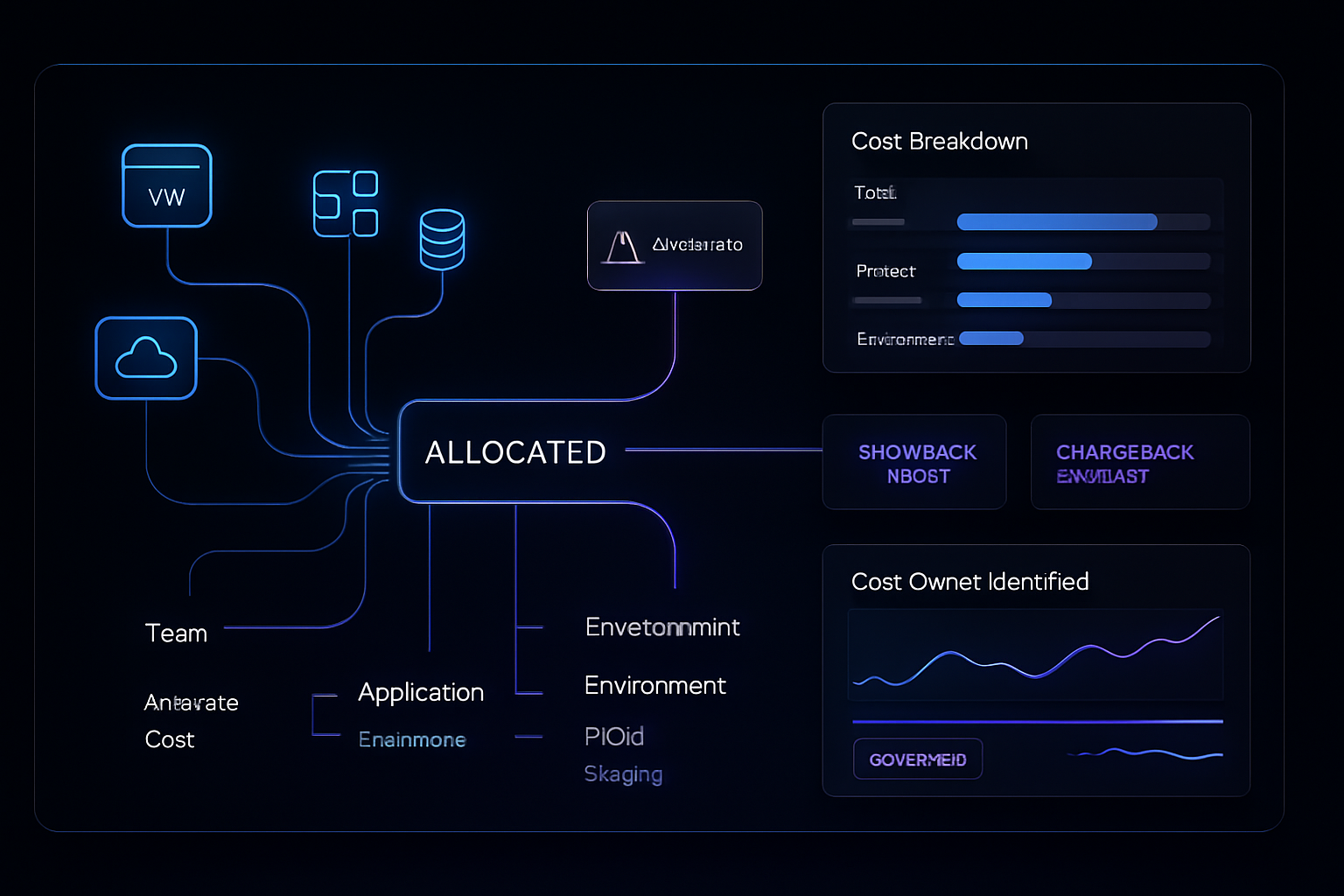
Cost allocation ready for showback and chargeback
SOLDIG turns cloud spend into actionable information, allowing you to accurately allocate costs to teams, products, environments and business units. This traceability is the foundation of any mature FinOps practice: without clear allocation, there is no control and no accountability.
- check_circle Cost allocation by equipment, application, product and environment
- check_circle Prepared for showback and chargeback models
- check_circle Reduction of unallocated spending and orphaned resources
- check_circle Sound basis for ongoing financial governance
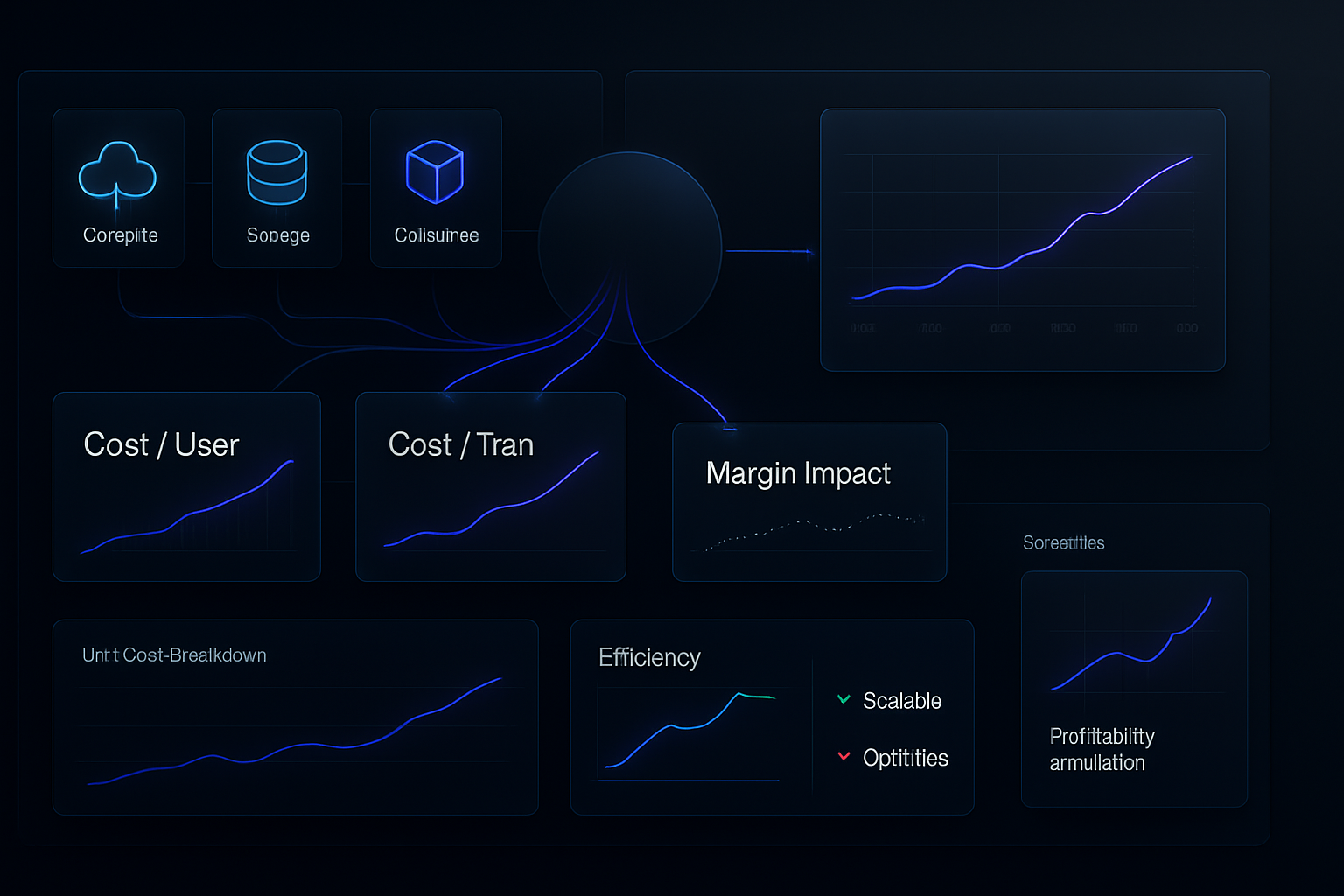
Unit economy connected to cloud consumption
Beyond total spend, SOLDIG allows you to analyze the cloud in business terms. The platform translates technical consumption into understandable metrics for leadership, facilitating decisions about profitability, pricing and scalability.
- check_circle Cost per customer, transaction or functionality
- check_circle Direct relationship between cloud consumption and margin
- check_circle Efficiency comparison between products or equipment
- check_circle Support for data-driven investment decisions
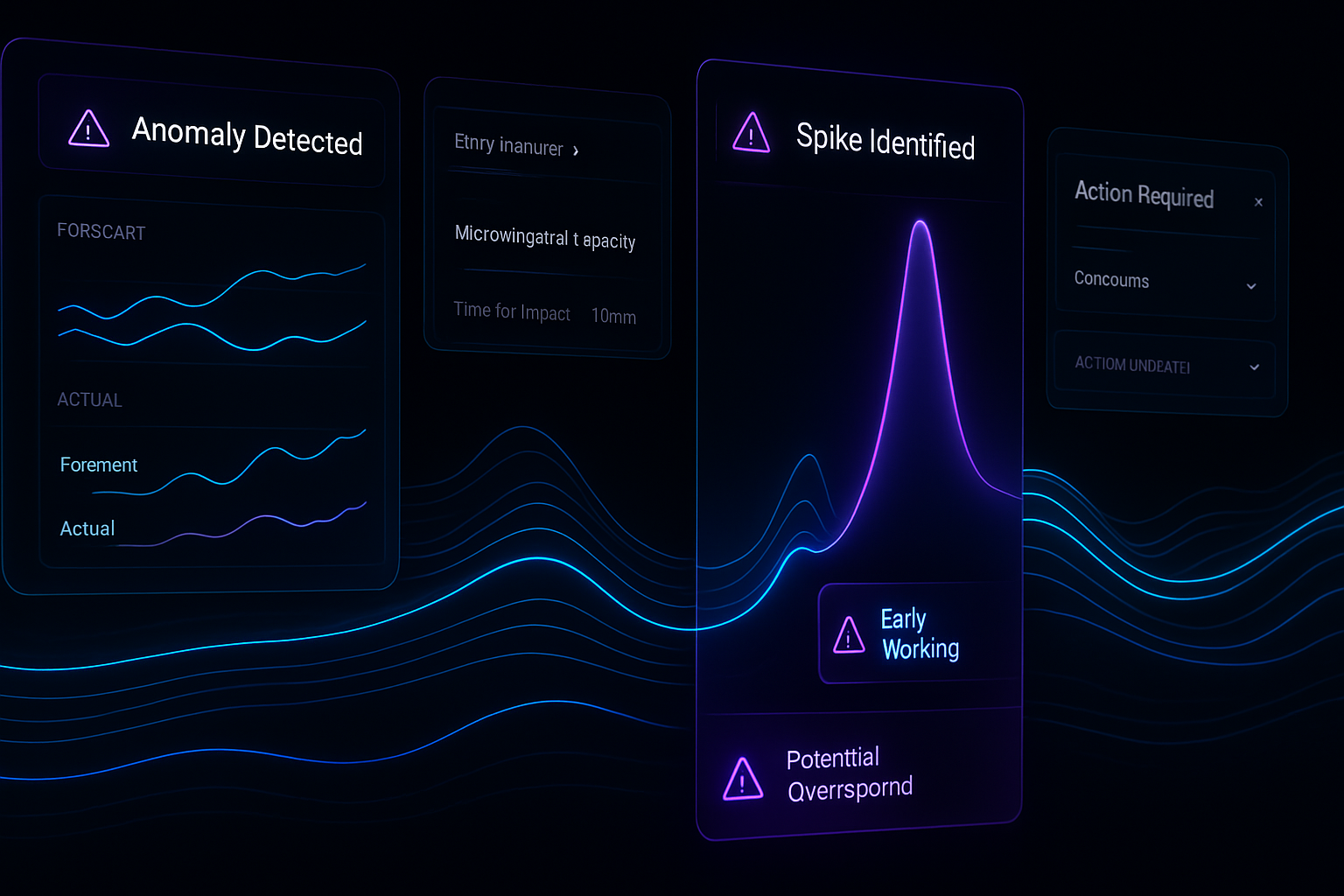
Proactive identification of deviations and spending peaks
SOLDIG detects atypical behavior in cloud consumption early, avoiding surprises at month-end. The detection of anomalies allows for rapid action, reducing financial impact and improving operational discipline.
- check_circle Early warnings for consumption deviations
- check_circle Identification of unexpected peaks or configuration errors
- check_circle Reduced reaction time to cost overruns
- check_circle Continuous improvement of forecast and financial control
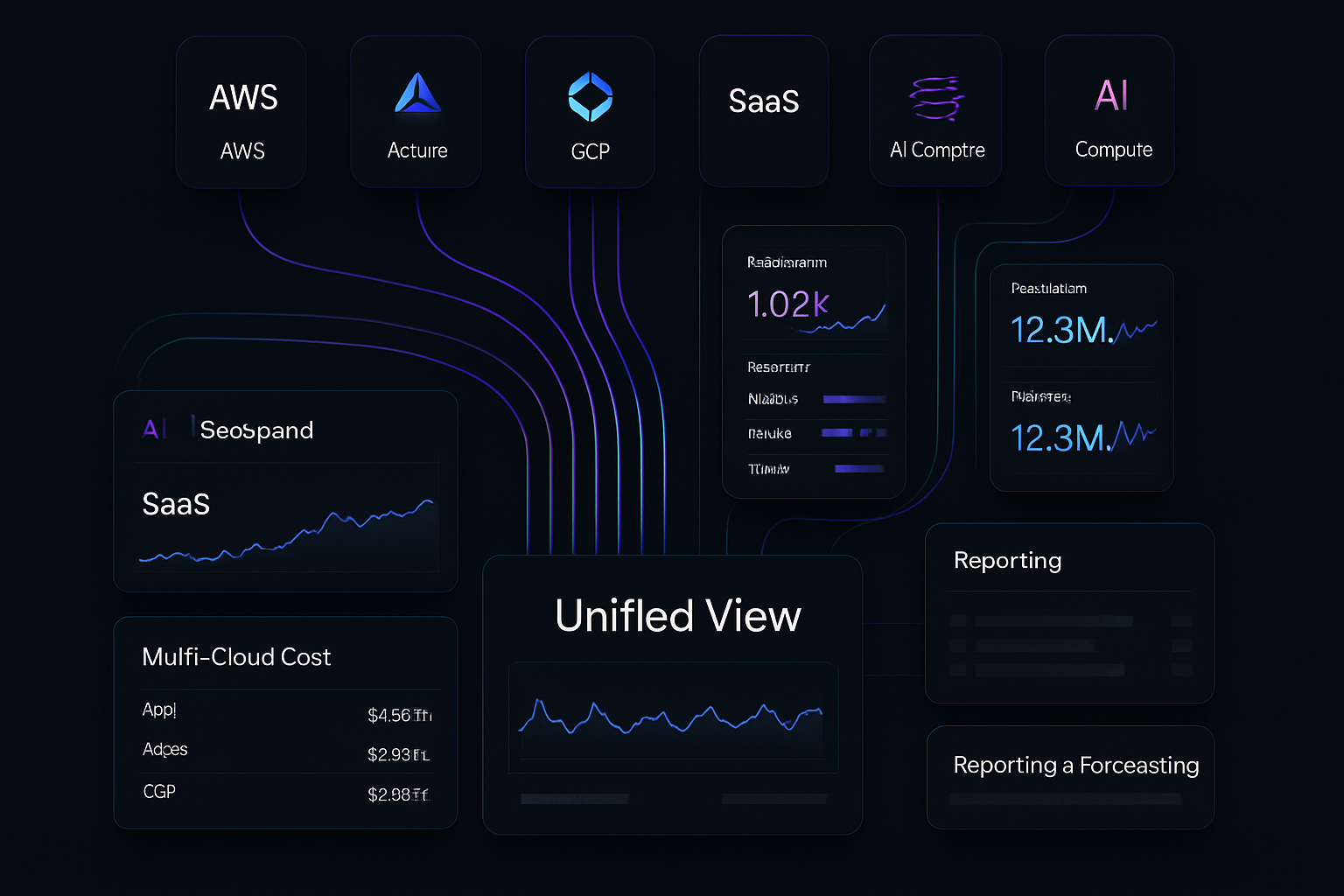
Unified control of cloud, SaaS and artificial intelligence
Modern organizations operate in fragmented environments. SOLDIG consolidates spending from multiple clouds and technology layers into a coherent view, enabling consistent financial management even in complex scenarios.
- check_circle Unified visibility across AWS, Azure, GCP and Kubernetes
- check_circle Integration of SaaS costs and external services
- check_circle Controlling AI spending: GPUs, inference, training and tokens
- check_circle Basis for a business-aligned Cloud+ strategy
FinOps powered by artificial intelligence
Ask cloud spending as you would a financial analyst.
Ask questions such as:
Intelligent recommendations for optimization
AI analyzes consumption patterns and generates prioritized recommendations, such as:
Conversational FinOps
Turn cost management into an ongoing dialogue.
Designed for decision makers
CFO / Finance
Reliable forecast backed by predictive models
Cloud OpEx and AI control
Visibility by business unit
Elimination of budget deviations
CTO / CIO
Scaling cloud and AI without financial friction
Balance between speed, cost and risk
Financially conscious architecture by design
Head of Engineering / Platform
Accountability without micromanagement
Automated and prioritized optimization by impact
Technical freedom with control
Product / Business
Unit economics clear
Informed pricing decisions
Profitable growth based on real data
Proven impact on cloud-intensive industries
"We went from justifying cost overruns to making financial decisions with real data from the cloud."
"Now the cost is designed together with the architecture, not corrected afterwards."
"For the first time we understood our unit economics and were able to climb with clarity."
"We went from justifying cost overruns to making financial decisions with real data from the cloud."
"Now the cost is designed together with the architecture, not corrected afterwards."
"For the first time we understood our unit economics and were able to climb with clarity."
Frequently Asked Questions
All you need to know about CCM and Finops
Cloud Cost Management (CCM) focuses on measuring, analyzing and optimizing cloud spending at the technical level: visibility, cost allocation and savings actions.
FinOps is the operational and cultural practice that connects that technical control with business decisions, aligning Finance, Engineering and Product to maximize value per dollar invested.
At SOLDIG, CCM is the technology enabler; FinOps is the governance and decision-making model. The two work together.
SOLDIG creates a common language between traditionally disconnected areas:
- Finance gains visibility, reliable forecasting and OpEx control.
- Engineering maintains speed without friction and bureaucracy
- Business understands the impact of cloud spending on margins and growth
FinOps practice translates into distributed accountability, data-driven decisions and continuous, not reactive, governance.
Yes. SOLDIG is designed for modern, distributed environments including:
-
AWS, Azure and Google Cloud
-
Kubernetes (costs per cluster, namespace and workload)
-
Infrastructure services, platforms and mixed loads
This enables a unified view of spend, even when consumption is fragmented across multiple vendors and technology layers.
AI in SOLDIG does not replace equipment, it enhances it.
It is used to:
-
Analyze complex spending patterns
-
Detect waste and optimization opportunities
-
Prioritize actions according to financial impact
-
Facilitate natural language queries on costs and consumption.
The result is better decision making, faster and with less friction, especially in dynamic scenarios such as AI, GPUs, inference and SaaS.
Impact is seen in weeks, not months.
-
Visibility and cost allocation: immediate
-
First optimizations: short term
-
FinOps maturity (forecast, unit economics, governance): incremental
SOLDIG is designed to generate early quick wins while building a long-term sustainable practice.
To scale cloud without financial control is to lose margin in slow motion.
Turn your cost management in the cloud into a strategic capability with
Cloud Cost Management + FinOps from SOLDIG.